


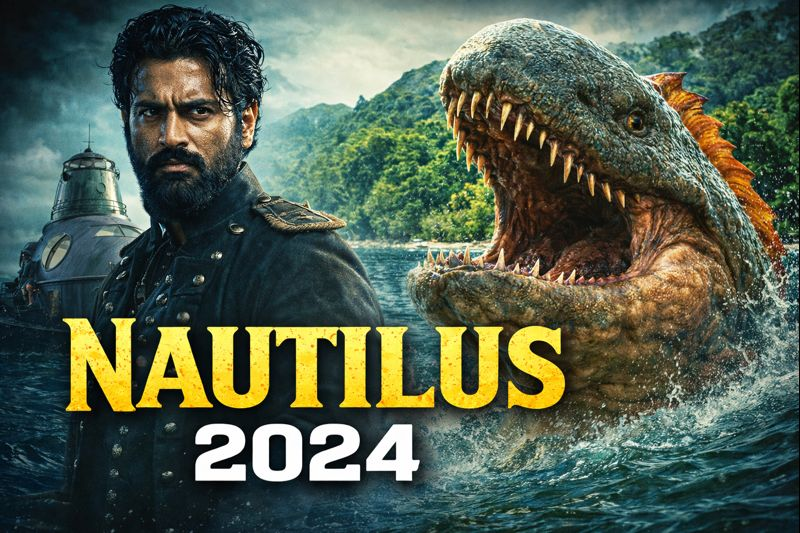
Nautilus is a science-fiction adventure television series inspired by Jules Verne’s classic novel 20,000 Leagues Under the Sea, reimagined with a darker, more action-driven tone and a strong focus on the origins of Captain Nemo and the legendary submarine Nautilus. Set in the late 19th century during the height of European colonial expansion, the series blends historical drama, political conflict, and sea-monster survival into a continuous, high-stakes journey across dangerous oceans and uncharted territories.
The story follows Nemo, an Indian prince and former soldier whose family and homeland were destroyed by colonial forces. Betrayed by the British Empire and left for dead, Nemo is rescued by a secretive group of scientists and engineers working on a revolutionary underwater vessel. This vessel becomes the Nautilus, a technologically advanced submarine far ahead of its time, capable of deep-sea travel, high-speed underwater combat, and long-term survival beneath the ocean. Nemo takes command of the ship, not just as a captain, but as a symbol of rebellion against imperial powers that dominate the seas and exploit distant lands.
As Nemo and his crew flee from British naval forces, the series gradually introduces the core members of the Nautilus team, including skilled engineers, scientists, fighters, and survivors from different parts of the world. Each character carries their own past, loyalties, and secrets, creating tension within the crew while also forming a fragile family bound by the need to survive. The Nautilus becomes both a weapon and a refuge, offering protection from enemies above the waves and horrors lurking below.
One of the most striking elements of the series is its focus on giant sea creatures, particularly the giant eels that appear in viral clips online. These massive, predatory beings inhabit shallow coastal waters, river mouths, and hidden underwater caverns. In several early episodes, the crew encounters these creatures while exploring remote shorelines and attempting to resupply. A tense and memorable sequence shows the giant eels rising from the water and attacking a small raft and beach encampment, forcing the crew into a desperate fight for survival. The scene emphasizes the raw power of nature and reminds viewers that the ocean itself is as dangerous as any human enemy.
Beyond monster encounters, Nautilus explores deeper political and emotional themes. Nemo is not portrayed as a simple hero, but as a man driven by grief, anger, and a desire for justice. His war against colonial forces raises questions about revenge, freedom, and the cost of violence. The British Empire views him as a terrorist and pirate, while oppressed communities see him as a symbol of resistance. This moral conflict runs throughout the series, shaping Nemo’s decisions and the loyalty of his crew.
Visually, the show combines practical sets with heavy CGI to bring the submarine, underwater cities, and monstrous creatures to life. The Nautilus itself is portrayed as a dark, industrial marvel, filled with glowing instruments, steam-powered mechanisms, and advanced weaponry. Underwater scenes highlight bioluminescent environments, sunken ruins, and deep-sea predators, creating a sense of constant danger and wonder.
As the season progresses, the crew uncovers secrets about the true origins of the Nautilus, hidden alliances within the British Navy, and ancient legends tied to the world’s oceans. Each episode builds toward a larger conflict that threatens not only Nemo’s mission, but the balance of power across the seas. The series ends its main arc with the Nautilus becoming a known and feared presence worldwide, setting the stage for further adventures and even greater confrontations in future seasons.
In summary, Nautilus (2024) is not just a monster or sea-adventure series, but a layered reimagining of a classic story that blends giant sea creatures, political rebellion, emotional character arcs, and high-tech naval warfare. The viral giant eel scenes represent only one part of a much bigger narrative about survival, freedom, and the price of fighting against an empire in a world ruled by the oceans.