

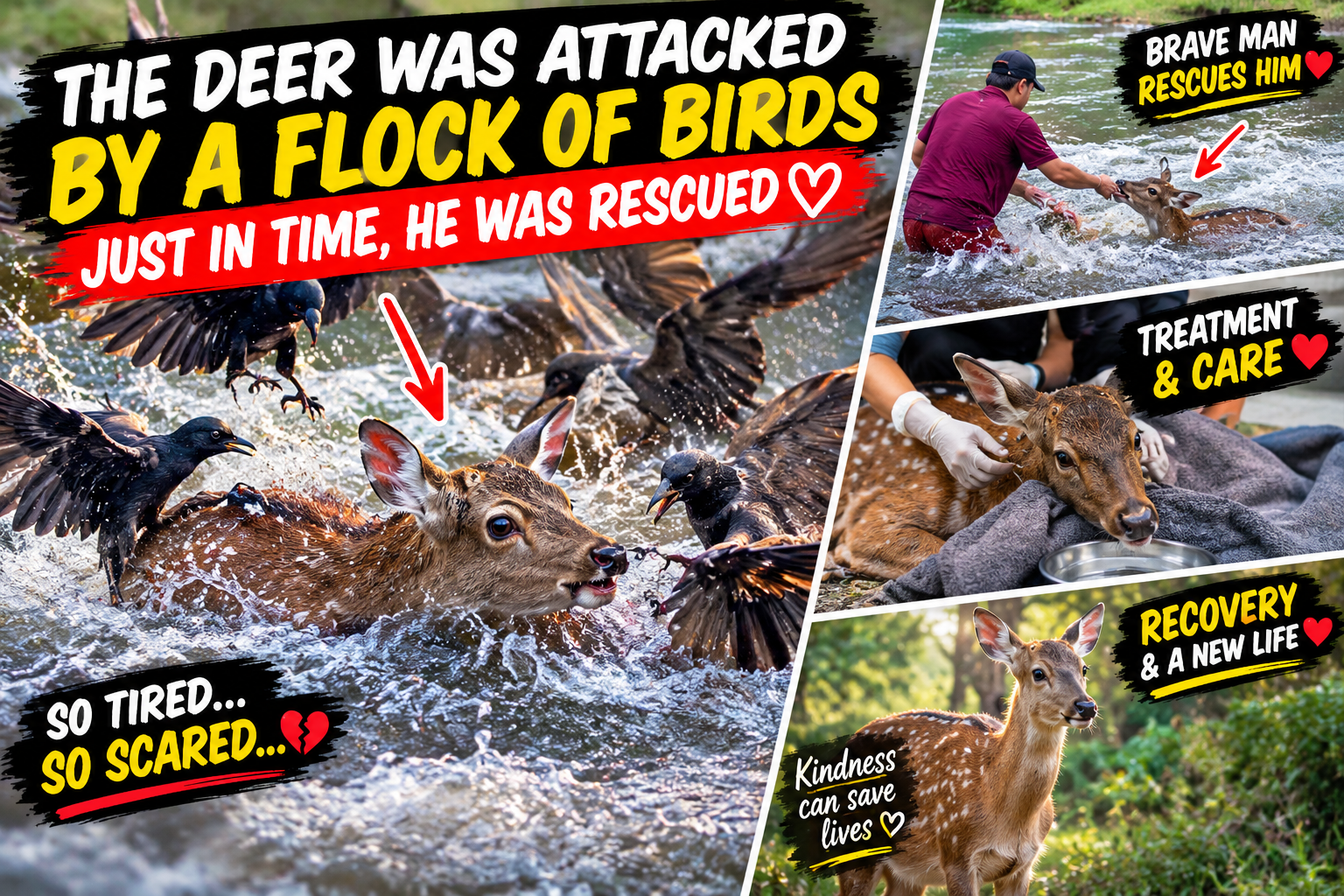
The dramatic rescue began when a frightened deer was found struggling in a river while surrounded by a group of aggressive birds. The exhausted animal appeared to be in serious distress, desperately trying to keep itself above the moving water while the birds continued gathering around it and pecking at its body.
The deer seemed to have very little energy left. Being attacked while already struggling in the river made it difficult for the animal to escape. Every attempt to move through the water appeared to leave it more exhausted, and the situation could have ended tragically if nobody intervened.
A Man Rushes Into the Water
A passerby noticed the deer’s desperate situation and immediately decided to help. Rather than remaining safely on the riverbank, he entered the shallow section of the stream and moved toward the struggling animal.
The deer was frightened and continued trying to escape, while the rushing water made it difficult for the rescuer to approach. The man carefully positioned himself between the animal and the danger, attempting to guide the deer away from the area where the birds were surrounding it.
After several tense moments, he was able to reach the exhausted deer and help it move toward safer ground. Once the animal was away from the strongest current and the attacking birds, it finally had an opportunity to rest.
Bringing the Deer to Safety
The deer was extremely tired after fighting against the current and the birds. The rescuers would need to handle it carefully because an exhausted wild animal can become even more vulnerable after such a stressful experience.
Once safely out of the water, the deer could be assessed for injuries, dehydration, exhaustion, and any wounds caused by the birds or the struggle in the river. A wildlife rehabilitator or veterinarian could then provide appropriate treatment and determine whether the animal was strong enough to return to the wild.
The Recovery Process
The first stage of recovery would focus on allowing the deer to regain its strength. It would need a quiet, protected environment away from predators and other animals. Its hydration, breathing, temperature, movement, and physical condition could be monitored closely.
If injuries were discovered, veterinary professionals could clean and treat the affected areas and provide additional supportive care when necessary. Once the deer was stable, the rehabilitation process would focus on restoring its strength and ensuring that it could stand, walk, and eventually move normally again.
For a wild deer, the ultimate goal of rehabilitation would be to return it to its natural environment once it was healthy and capable of surviving independently.
A Second Chance
What began as a terrifying struggle in the river became a remarkable rescue because one person chose to intervene. The deer had already been pushed to its limits by the water and the birds, but the rescuer gave it a chance to escape.
From desperately fighting to stay alive in the river to being carried toward safety and receiving the care it needed, this deer’s story shows how a moment of compassion can make the difference between life and death.